
1.5 GPM vs. 1.8 GPM Faucets: What's the Difference and Which Is Better?
You're comparing two faucets. One delivers 1.5 gallons per minute (GPM), while the other delivers 1.8 GPM. It's only a difference of 0.3 gallons, so does it really matter?
The short answer? Yes. But where you're using the faucet matters more than you might think.
A lower flow rate can help conserve water, but less isn't always better. A faucet that works perfectly in a busy airport washroom might leave you frustrated when you're trying to rinse a pot in your kitchen.
Let's look at what those numbers actually mean and why choosing the right flow rate is about more than saving water.
What Does GPM Mean on a Faucet?
GPM stands for gallons per minute. It measures the volume of water that flows through a faucet in one minute.
The higher the GPM, the more water the faucet can deliver over a given period.
Here's how two common faucet flow rates compare:
At the same water pressure, a 1.5 GPM faucet uses approximately 17% less water than a 1.8 GPM faucet when both run for the same amount of time at full flow.
That sounds like an obvious win for water efficiency. But the real question is whether that reduced flow still allows the faucet to do its job comfortably.
And that's where things get interesting.
Is 1.5 GPM Enough for a Bathroom Faucet?
For most residential bathrooms, absolutely.
Think about what you use your bathroom sink for: washing your hands, brushing your teeth, rinsing your face or shaving. None of these activities typically require a large volume of water.
A 1.5 GPM bathroom faucet offers a practical balance between everyday comfort and water conservation.
The U.S. Environmental Protection Agency's WaterSense® program recognizes certified residential bathroom faucets with maximum flow rates of 1.5 GPM, provided they also meet performance requirements.
In fact, WaterSense-labelled bathroom faucets can reduce flow by approximately 30% or more compared with the U.S. federal standard of 2.2 GPM.
And here's something worth remembering: lower flow doesn't automatically mean a weaker or less comfortable stream.
A well-designed faucet aerator helps control how water leaves the spout, creating a comfortable stream while managing water consumption.
For everyday bathroom use, it's often all you need.
Can a Bathroom Faucet Have an Even Lower Flow Rate?
Yes, and in certain environments, that's exactly what you want.
Consider a busy shopping mall or airport washroom. Hundreds, sometimes thousands, of people might use the same sinks throughout the day.
In these high-traffic commercial settings, lavatory faucets with flow rates of 0.5 GPM (1.9 L/min) or even 0.35 GPM (1.3 L/min) can be appropriate for simple tasks like handwashing.
When multiplied across thousands of uses, reducing the amount of water delivered per minute can contribute to meaningful water savings.
But would you want that same faucet at home?
Not necessarily.
While a very low-flow faucet might be sufficient for a quick handwashing, it can feel restrictive when you're washing your face or cleaning around the sink.
The EPA specifically distinguishes between public and private lavatory applications, noting that flow rates of 0.5 GPM or less are not appropriate for private bathroom faucets.
The takeaway? A faucet should be efficient, but it still needs to be practical for the person using it.
Is 1.8 GPM Better for a Kitchen Faucet?
In many kitchens, that extra flow makes a difference.
Kitchen faucets have a more demanding job than bathroom faucets. They're used for washing produce, rinsing dishes, cleaning cookware, filling pots and tackling everything that comes with preparing meals.
A 1.8 GPM kitchen faucet delivers approximately 6.8 litres of water per minute, making it a practical choice for everyday kitchen tasks.
To put that into perspective, filling a three-gallon container takes:
- 1.5 GPM: approximately 2 minutes
- 1.8 GPM: approximately 1 minute and 40 seconds
Twenty seconds might not seem significant, but the difference becomes noticeable when you're working around the kitchen throughout the day.
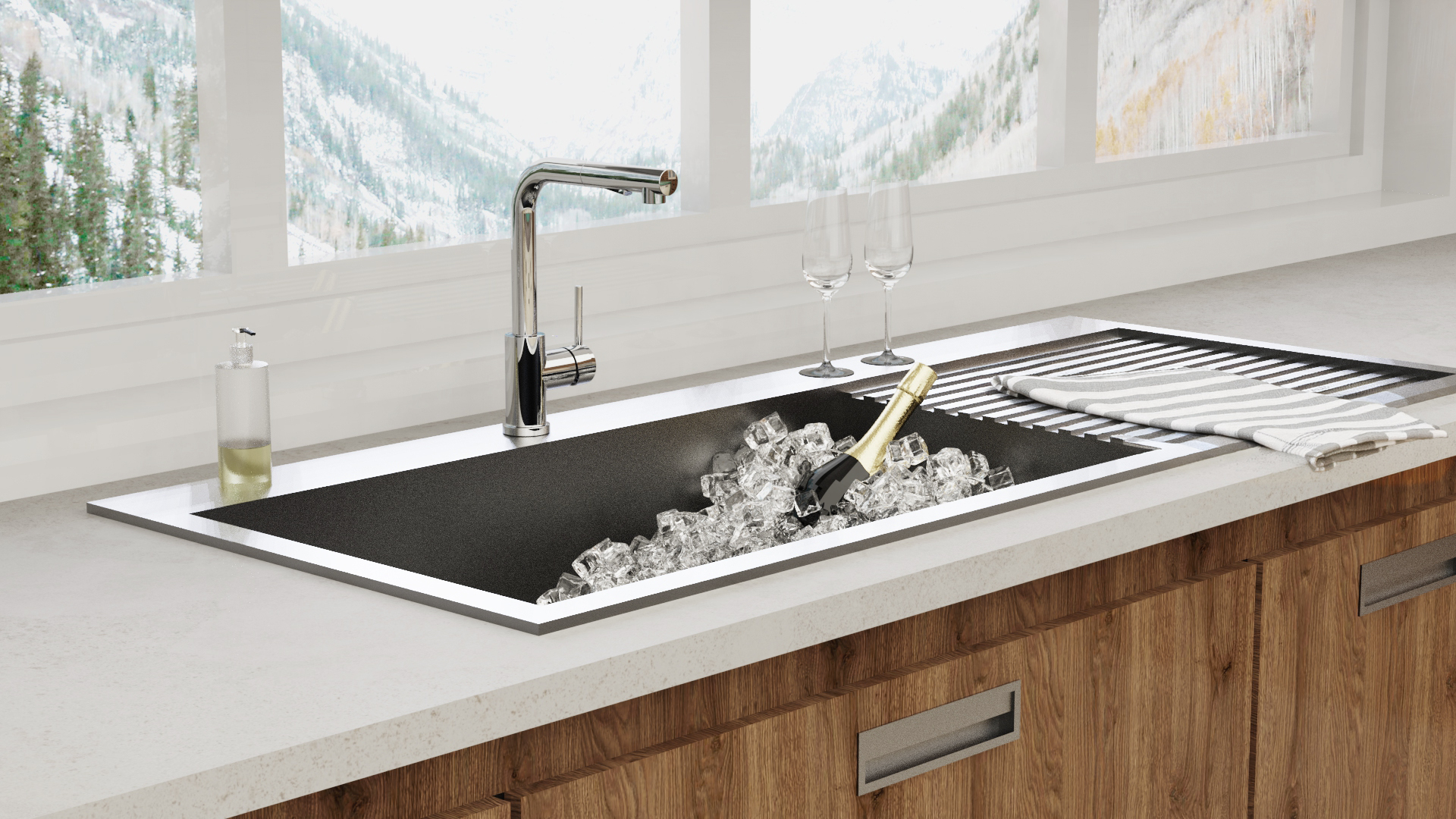
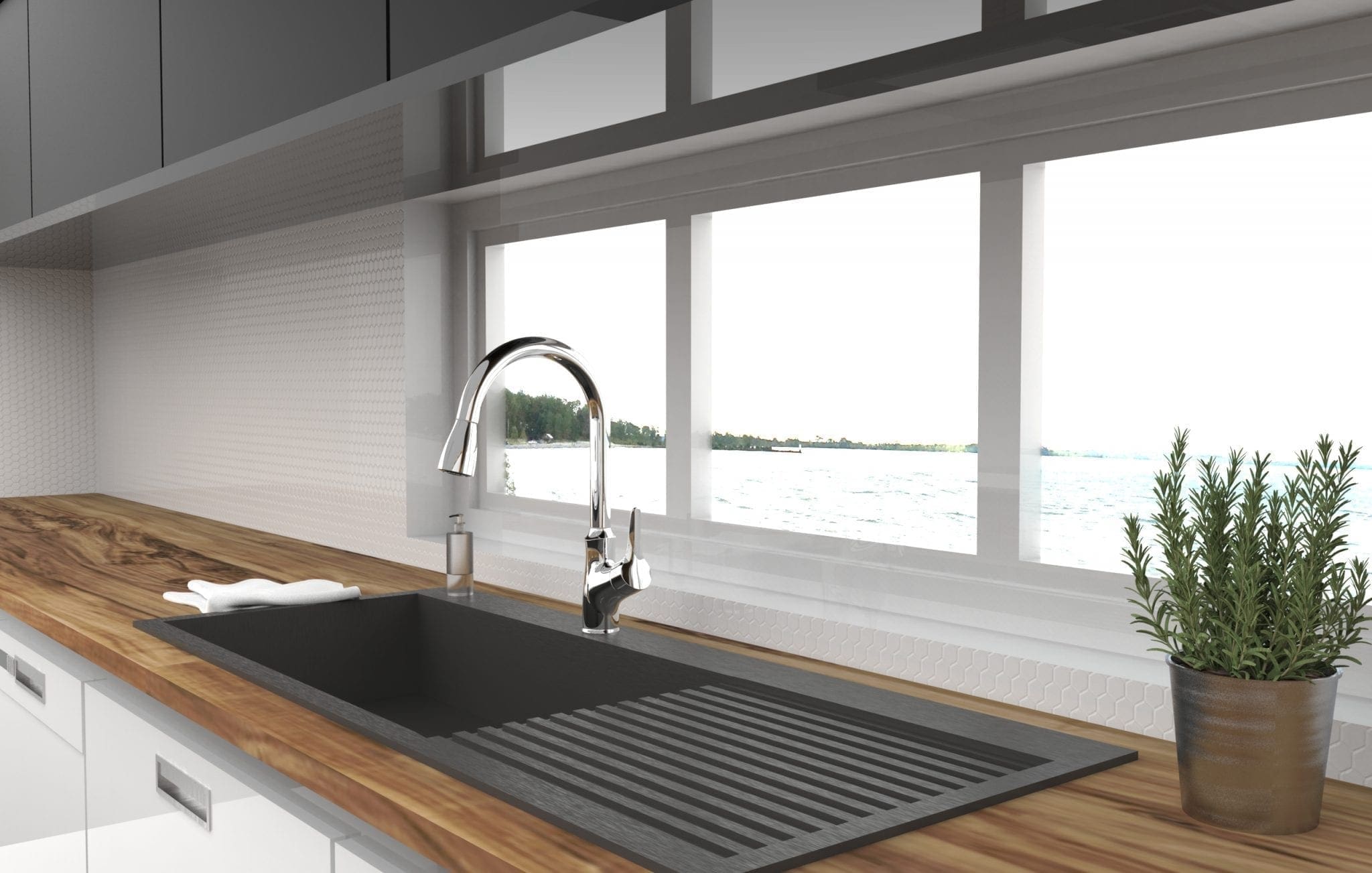
A good example is Bélanger's Adore pull-down kitchen faucet, which combines a 1.8 GPM flow rate with stream and spray functions for everyday kitchen use.
Of course, flow rate isn't the only feature that affects kitchen performance. The spray pattern, aerator design and functionality of the faucet all contribute to the experience.
If you're comparing different configurations, our guide to pull-down, pull-out and standard kitchen faucets can help you understand which design best suits your needs.
Why a 0.5 GPM Kitchen Faucet Might Be a Bad Idea
Let's take water conservation a little further.
Imagine installing a kitchen faucet with a flow rate of just 0.5 GPM.
On paper, the water savings might look impressive.
In practice? Not so much.
Filling a five- or six-quart pot (approximately 4.7 to 5.7 litres) would take roughly 2.5 to 3 minutes at full flow.
That's a long time to stand at the sink waiting for enough water to boil pasta.
Then there's the issue of rinsing dishes. When using a pull-down sprayer, adequate flow and a well-designed spray pattern help remove food residue efficiently. Restricting the flow too much can make the task more difficult.
We've seen very low-flow kitchen faucets specified in projects before, and we've also encountered the resulting end-user frustration.
It's a good reminder that water efficiency should never come at the expense of basic functionality.
A 1.5 GPM kitchen faucet can still be an excellent option, especially when designed with an effective spray system. But reducing flow without considering how the faucet will be used isn't necessarily an improvement.
What About Showers? Is 1.5 or 1.8 GPM Enough?
Flow rate matters just as much in the shower, although the experience is a little different.
Traditional showerheads commonly have a maximum flow rate of 2.5 GPM. However, modern water-efficient showerheads can deliver a comfortable shower at considerably lower flow rates.
According to the EPA's WaterSense showerhead guidelines, certified showerheads use no more than 2.0 GPM and must meet performance criteria for spray intensity and coverage.
That means a well-designed showerhead delivering 1.5 or 1.8 GPM can still offer a satisfying showering experience.
The secret isn't simply how much water comes out. It's how that water is distributed.
A thoughtfully engineered showerhead can use its nozzles and spray pattern to maintain comfortable coverage while reducing water consumption.
But there's a limit to how far you can reduce flow before the experience begins to suffer.
Can a Showerhead Have Too Little Water Flow?
Imagine stepping into the shower and discovering that the water flow is so limited that it takes twice as long to rinse shampoo from your hair.
That's not exactly the relaxing experience you had in mind.
Reducing a showerhead's flow rate to 0.75 or 0.5 GPM could make rinsing noticeably more difficult, depending on the showerhead design and available water pressure.
And if you end up spending considerably longer in the shower to compensate, some of those expected water savings could disappear.
There's a reason WaterSense evaluates more than maximum flow. Spray force, coverage and performance matter because a showerhead needs to do more than conserve water. It needs to deliver a good shower.
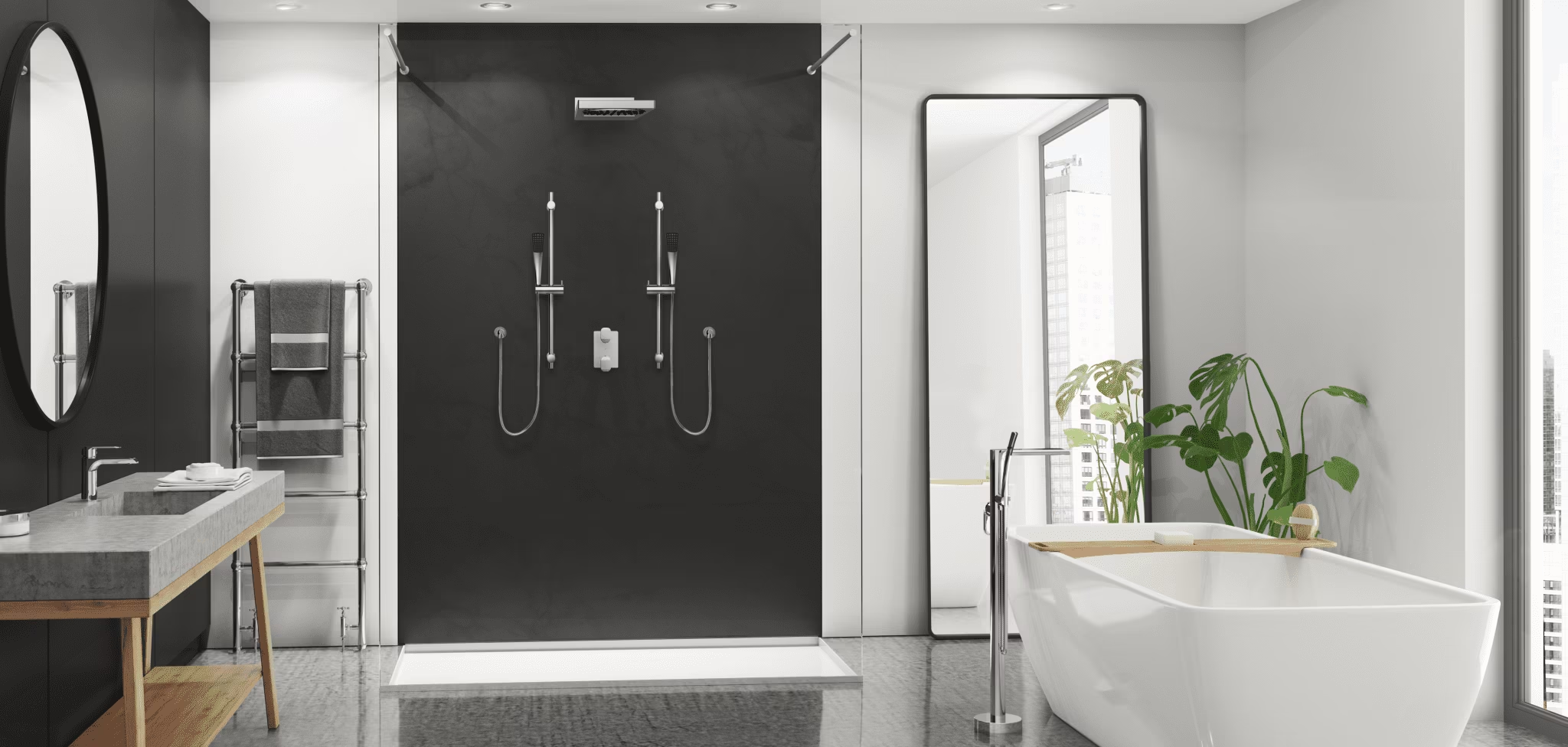
If you're considering upgrading your shower, explore our guide to creating a spa-like shower at home to see how choosing the right components can make a difference.
Does Lower GPM Mean Lower Water Pressure?
This is one of the most common misconceptions about water-efficient faucets.
No. Flow rate and water pressure are two different things.
- GPM (gallons per minute) measures the volume of water flowing through a fixture.
- PSI (pounds per square inch) measures water pressure.
A faucet's rated GPM is typically measured under specified testing conditions. For example, many kitchen and bathroom faucet specifications use 60 PSI.
A faucet designed to limit water flow can still deliver a comfortable, effective stream, even though it uses less water.
That's why good faucet engineering involves more than simply restricting the amount of water passing through the fixture.
Aerators, pressure compensation, spray design and internal components all play a role in the final result.
How Do You Choose the Right Faucet Flow Rate?
Whether you're renovating your home, designing a commercial space or specifying fixtures for a residential development, the same principle applies:
Start with the application, not just the lowest available GPM.
For a commercial washroom, a very low-flow faucet may be an excellent solution.
For a residential bathroom, a 1.5 GPM faucet often offers the right balance of efficiency and comfort.
For a kitchen, a flow rate between 1.5 and 1.8 GPM can provide an effective balance, depending on faucet design and intended use.
For a shower, look at both the flow rate and the quality of the spray experience.
And don't forget that a faucet's long-term performance matters just as much as its water consumption.
Consider its construction, certifications, replacement-part availability and overall durability before making a decision.
After all, an efficient faucet that performs reliably for years can offer more value than one selected purely because it has the lowest flow rate.
For a closer look at the relationship between durability, repairability and water conservation, read our article on what makes a faucet sustainable.
.jpg)
Frequently Asked Questions About Faucet Flow Rates
Is 1.5 GPM a Good Faucet Flow Rate?
Yes. A 1.5 GPM flow rate is well suited to most residential bathroom faucets and can also work effectively in kitchens, depending on the faucet's design and spray functionality.
Can You Tell the Difference Between 1.5 and 1.8 GPM?
You may notice the difference when filling large pots or containers. For shorter tasks like handwashing, the difference is generally less noticeable. Aerator design and water pressure also affect how the flow feels.
What Is the Best GPM for a Bathroom Faucet?
For most residential bathrooms, 1.5 GPM provides a good balance between water efficiency and everyday performance. Some lower-flow residential faucets can also perform well.
What Is the Best GPM for a Kitchen Faucet?
A flow rate of 1.5 to 1.8 GPM is a practical choice for many kitchens. A 1.8 GPM faucet offers faster filling, while a well-designed 1.5 GPM model can help reduce water use during regular operation.
Does a Lower GPM Faucet Always Save More Water?
Not necessarily. A lower GPM reduces the amount of water delivered per minute, but total water consumption also depends on how long the faucet runs. If a task requires substantially more time, the actual savings may be smaller than expected.
Are 1.8 GPM Kitchen Faucets WaterSense Certified?
No. The EPA does not currently offer WaterSense labelling for kitchen faucets. However, it identifies kitchen faucets rated at 1.8 GPM or less as water-efficient options.
The Bottom Line: Water Efficiency Should Work for Everyone
When it comes to choosing a faucet, one size doesn't fit all.
A flow rate that works beautifully in a commercial washroom might be frustrating in a residential kitchen. Likewise, a showerhead that looks exceptionally efficient on paper might not deliver the experience someone expects.
Reducing water consumption is an important goal. It helps conserve resources and can reduce the energy required to treat, distribute and heat water.
But as engineers, designers and manufacturers, we also have a responsibility to think about the people using these products every day.
At Bélanger, we believe that water efficiency and everyday performance should work together, not compete with one another.
Because ultimately, the best faucet isn't necessarily the one that uses the least water. It's the one that uses water intelligently, without making everyday life more difficult.
.png)


.png)
.jpg)