
Pressure-Balanced vs. Thermostatic Shower Valves: What's the Difference?
When you're shopping for a new shower, choosing the style might actually be the easy part. Rain shower or handheld? Matte Black or Chrome? One showerhead or a complete spa-like setup?
These are the fun decisions.
But there's one important detail that often gets overlooked, and it's hiding right behind your shower wall: the shower valve and its mixing cartridge.
You might never see it, but this small component plays a big role in your everyday shower experience. It determines how hot and cold water are mixed, how your shower handle operates, and, most importantly, how consistently your shower maintains its temperature.
Ever had someone flush a toilet while you were showering, only to be greeted by an icy blast or a sudden rush of hot water?
Well, there's a reason for that.
And it all comes down to how your shower mixes water.
What are the different types of shower mixing valves?
There are three main types of automatic shower mixing valves: pressure-balanced (P), thermostatic (T), and combined thermostatic/pressure-balanced (T/P). Each uses a different mechanism to regulate water temperature and respond to changes in your plumbing system.
But we're going to count three and a half.
Why? Because there's also the older, traditional method of mixing hot and cold water without automatic temperature compensation.
Here's the breakdown:
- Traditional hot/cold mixing: Manually combines hot and cold water without automatically compensating for supply changes.
- Pressure-balanced (P): Responds to fluctuations in hot and cold water pressure to help maintain a stable mixed-water temperature.
- Thermostatic (T): Senses the mixed-water temperature and adjusts the hot/cold ratio to maintain your selected temperature.
- Thermostatic/pressure-balanced (T/P): Combines both mechanisms for temperature regulation and direct pressure compensation.
All three automatic types are recognized under the ASSE 1016 / ASME A112.1016 / CSA B125.16 shower valve standard.
Now, let's get into why this matters when you're standing under the showerhead.
Why does your shower get hot or cold when someone flushes the toilet?
Picture this.
You're enjoying a perfectly warm shower. You've found that sweet spot, the temperature is just right, and you're finally getting a moment to yourself.
Then someone flushes the toilet.
Suddenly, your relaxing shower becomes considerably less relaxing.
To understand why, imagine pouring equal amounts of hot and cold water into a container. As long as those quantities stay the same, the resulting water temperature remains consistent.
Simple enough, right?
Now imagine someone turns on the hot water in the kitchen.
Part of the home's hot water supply is being used elsewhere. If less hot water reaches your shower while the cold water supply stays relatively unchanged, the resulting mixture can become colder.
The opposite can happen when someone flushes a toilet. The toilet draws cold water, potentially reducing the cold water pressure reaching your shower. If the hot water supply remains relatively unchanged, the shower can suddenly become much hotter.
The problem isn't necessarily your showerhead. It's how the hot and cold water are being mixed.
Without an automatic compensating mechanism, the shower cannot respond to these changes on its own.
And that's where modern mixing cartridges come in.
1. Traditional hot and cold water mixing: The old-school approach
Let's start with our honorary half-category.
Traditional shower controls mix hot and cold water mechanically, without an automatic mechanism to compensate for changes in supply pressure or temperature.
Think of older hotel bathrooms with two separate handles, one for hot and one for cold.
You adjust both until you find your ideal temperature.
Everything works beautifully, until someone elsewhere in the building decides they need water, too.
Because these systems don't automatically compensate for changes in the hot and cold water supplies, temperature fluctuations can be much more noticeable.
In modern installations, automatic temperature-compensating shower valves are commonly required to help reduce the risk of scalding and thermal shock. However, the requirements for existing installations, replacements, and renovations depend on local plumbing codes.
The takeaway? Traditional mixing can work, but it lacks the automatic temperature protection and stability offered by modern pressure-balanced and thermostatic valves.
2. How does a pressure-balanced shower valve work?
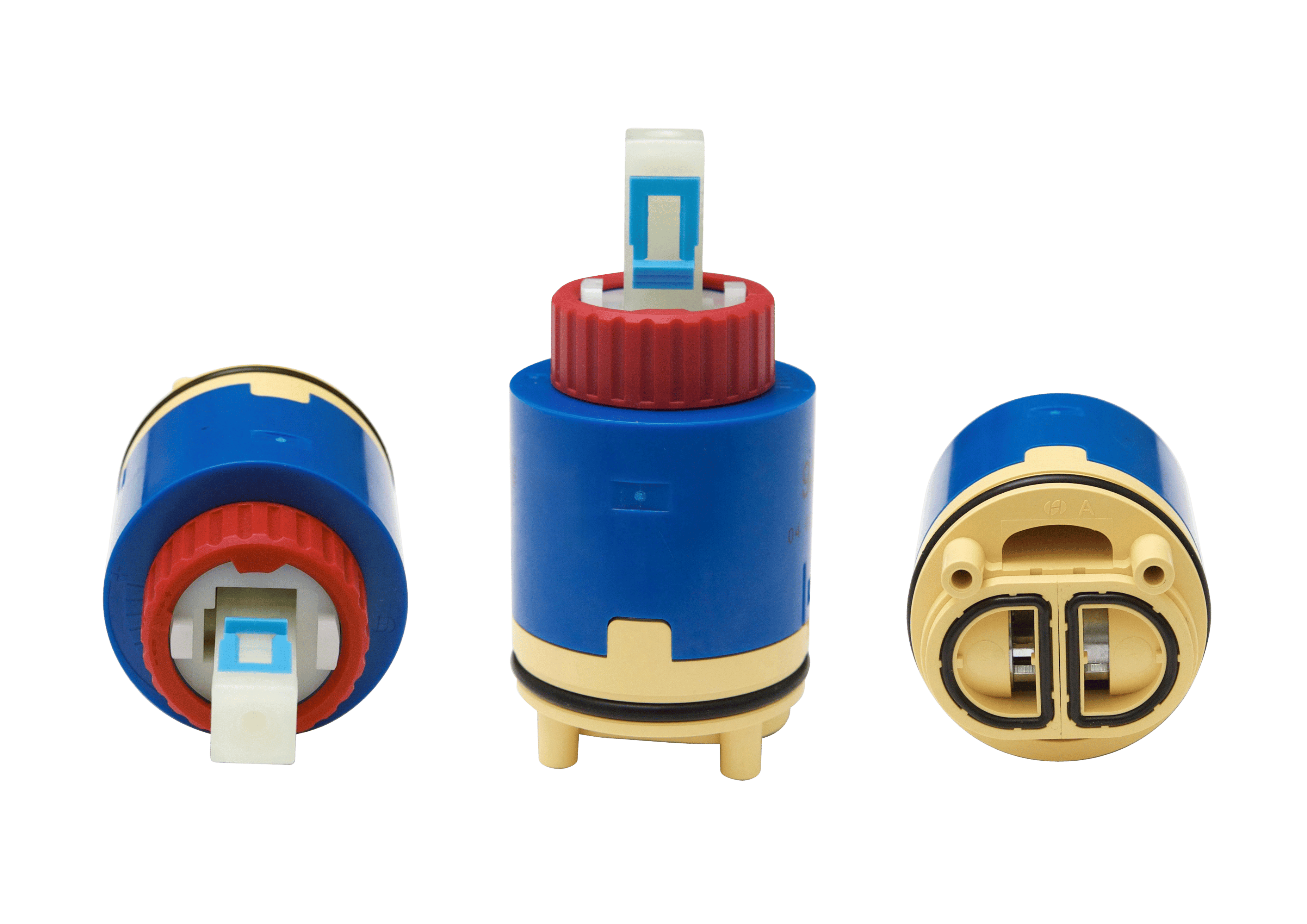
A pressure-balanced shower valve, also called a Type P valve, uses a mechanical balancing mechanism to respond to changes in hot and cold water pressure.
Its goal is simple: maintain a relatively consistent ratio of hot to cold water, even when the pressure on either side changes.
Let's go back to our toilet-flushing scenario.
You're taking a shower, and someone flushes the toilet.
The cold water pressure drops.
Inside the pressure-balanced cartridge, a balancing spool responds to this pressure difference and restricts the hot water entering the mixing chamber.
By reducing the hot water flow to match the available cold water pressure, the cartridge helps prevent that sudden increase in shower temperature.
Pretty clever for something you'll probably never see.
The advantage: Quick reactions to pressure changes
Pressure-balanced cartridges respond directly to changes in water pressure.
That makes them particularly useful in households where multiple fixtures are regularly being used at the same time.
Someone turns on the kitchen faucet? Flushes a toilet? Starts filling a sink?
Your shower valve is designed to compensate for the changing supply pressures.
You might still notice a decrease in overall water flow, but the temperature should remain considerably more stable than with a traditional mixing system.
The trade-off: Seasonal temperature changes
Here's the catch.
A pressure-balanced cartridge senses pressure, not water temperature.
That distinction matters.
During the summer, the cold water entering your home may be significantly warmer than during the winter. Depending on your location and water supply, these seasonal variations can be substantial.
Even if the hot and cold water pressures remain perfectly balanced, the resulting mixed-water temperature may change because the incoming water temperatures have changed.
As a result, you may need to adjust your shower handle throughout the year to maintain your preferred temperature.
Best suited for: Homeowners looking for reliable protection against sudden pressure fluctuations and straightforward everyday shower operation.
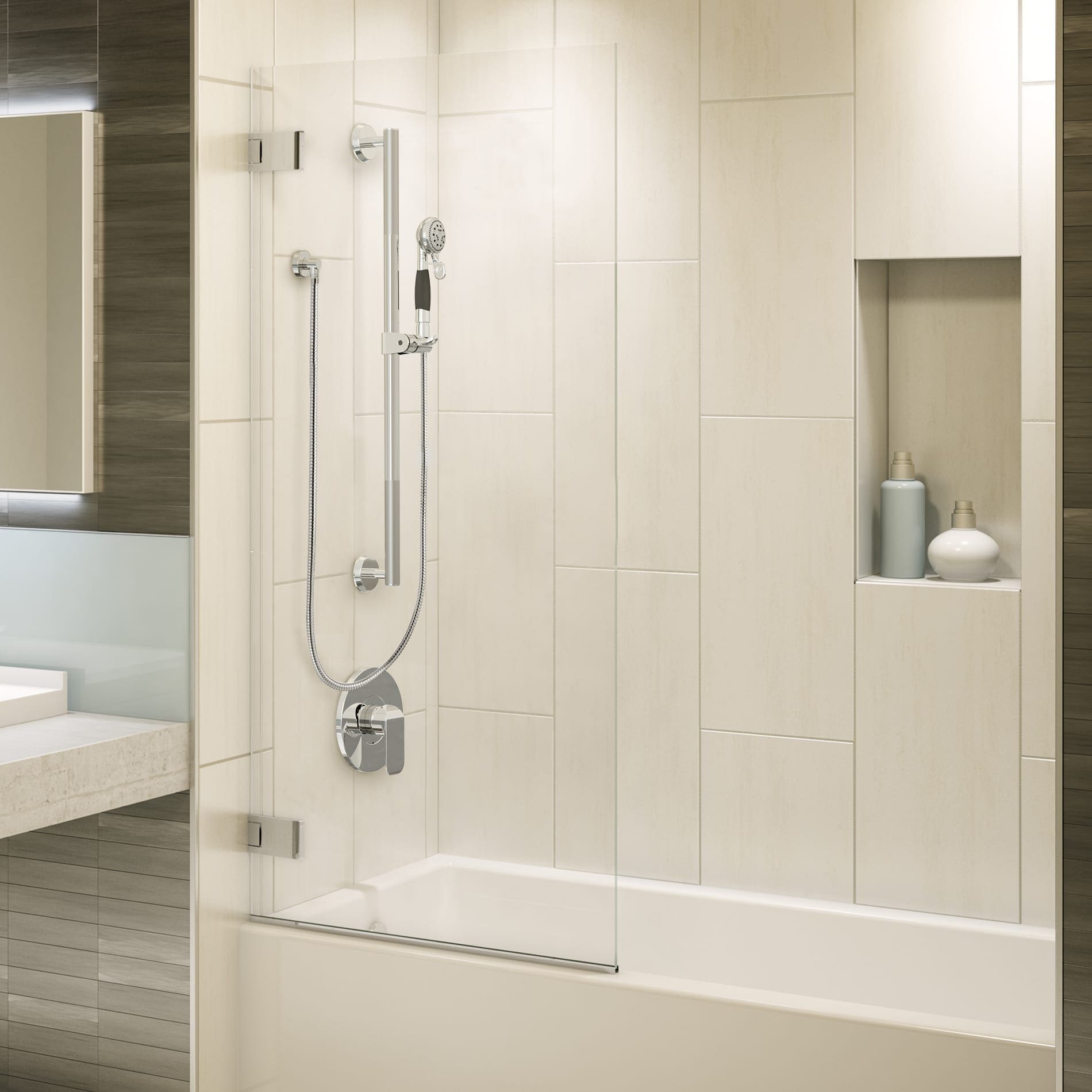
For an example, explore the Bélanger Solara pressure-balanced shower kit.
3. How does a thermostatic shower valve work?
Now, let's look at a different approach.
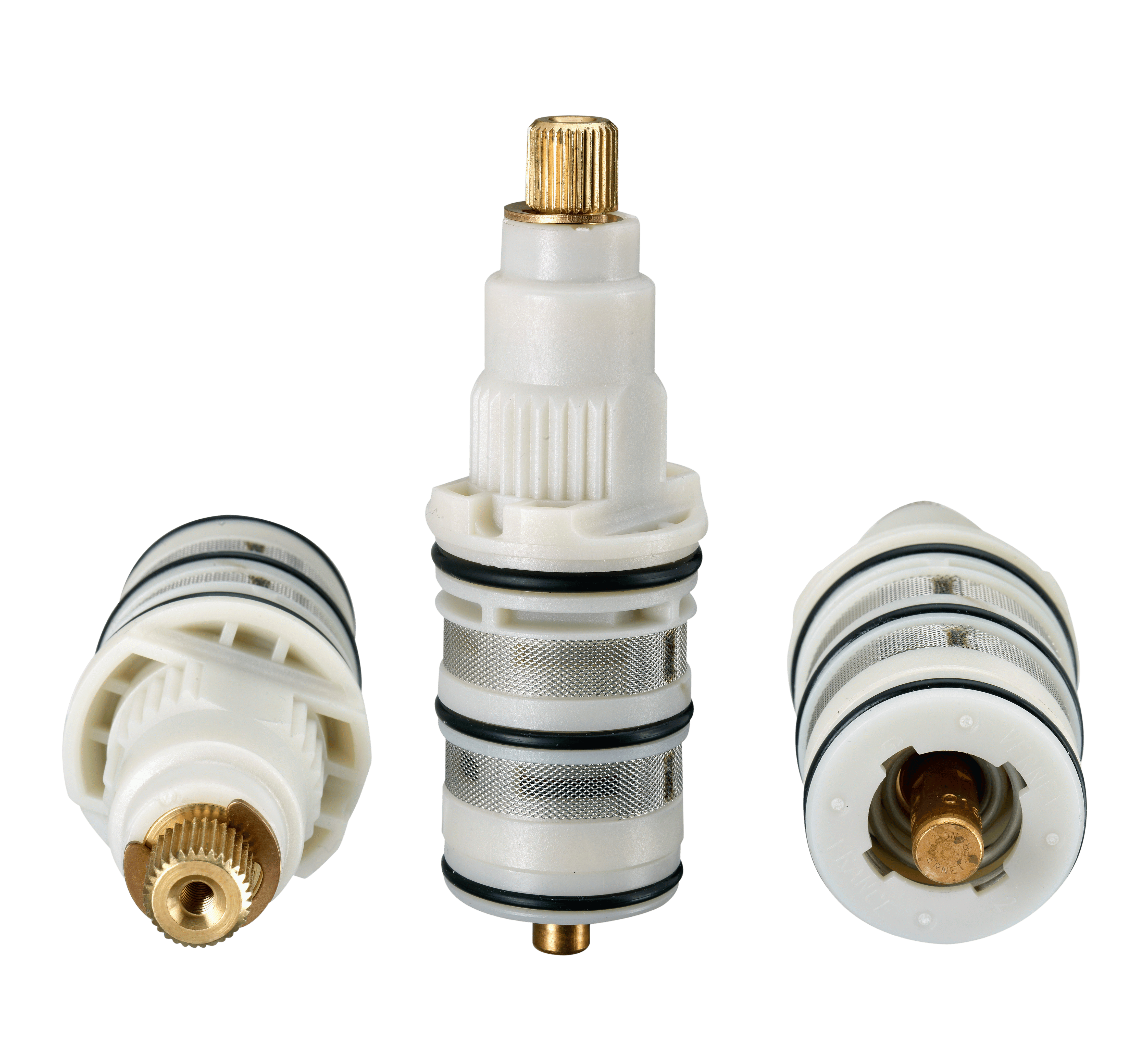
A thermostatic shower valve, also called a Type T valve, regulates water temperature by sensing the temperature of the mixed water itself.
Instead of responding directly to pressure differences, a thermostatic cartridge typically uses a temperature-sensitive element that expands or contracts as the water temperature changes.
As that element moves, it adjusts the proportion of hot and cold water entering the mixture.
The goal? Keep the water as close as possible to the temperature you've selected.
The advantage: Temperature consistency throughout the year
Remember those seasonal changes in incoming water temperature?
This is where thermostatic technology shines.
Imagine setting your shower to your preferred temperature in January.
As the seasons change and the incoming cold water becomes warmer, the thermostatic cartridge compensates by adjusting the mixture.
When winter returns and the incoming cold water gets colder, it adjusts again.
Rather than relying on a fixed mixing ratio, the valve actively responds to changes in the resulting water temperature.
This means less time readjusting the handle and more time enjoying your shower.
Of course, temperature stability still depends on the valve's operating range, the available hot water supply, and proper installation.
The trade-off: How it responds to sudden pressure fluctuations
Here's where things get interesting.
Unlike a pressure-balancing mechanism, a thermostatic element responds to changes in temperature.
When someone flushes a toilet, the thermostatic valve compensates for the resulting change in mixed-water temperature. However, because its response is based on temperature feedback rather than direct pressure balancing, its behaviour during sudden pressure fluctuations can differ from that of a pressure-balanced cartridge.
Depending on the valve's design and response characteristics, a brief temperature variation may be noticeable.
That doesn't mean thermostatic valves cannot compensate for pressure changes. They can. They simply use a different mechanism to do so.
It's a trade-off between two approaches to temperature regulation.
Best suited for: Homeowners who prioritize precise temperature selection, consistent comfort, and reduced adjustment as incoming water temperatures change.
3½. What is a thermostatic pressure-balanced (T/P) shower valve?
What if you don't want to choose between pressure compensation and temperature regulation?
Good news. You don't necessarily have to.
This brings us to our final half-category, and one of our favourite engineering solutions at Bélanger.
A thermostatic pressure-balanced valve, known as a Type T/P valve, combines a thermostatic element and a pressure-balancing mechanism within the same cartridge.
In other words, it responds to both water temperature and pressure.
Here's how the two mechanisms work together:
- The thermostatic element senses mixed-water temperature and adjusts the hot/cold ratio to maintain the selected temperature, including when incoming water temperatures change throughout the year.
- The pressure-balancing mechanism responds directly to changes in hot and cold supply pressures, helping reduce sudden temperature fluctuations when other fixtures are used.
Imagine enjoying a shower in the middle of winter, when your incoming cold water is particularly cold.
The thermostatic element helps maintain your preferred temperature.
Then someone flushes the toilet.
The pressure-balancing mechanism responds to the changing cold water pressure while the thermostatic element continues regulating the mixed-water temperature.
Two mechanisms, working toward one goal: a more stable and comfortable shower.
Bélanger's T/P shower valve technology
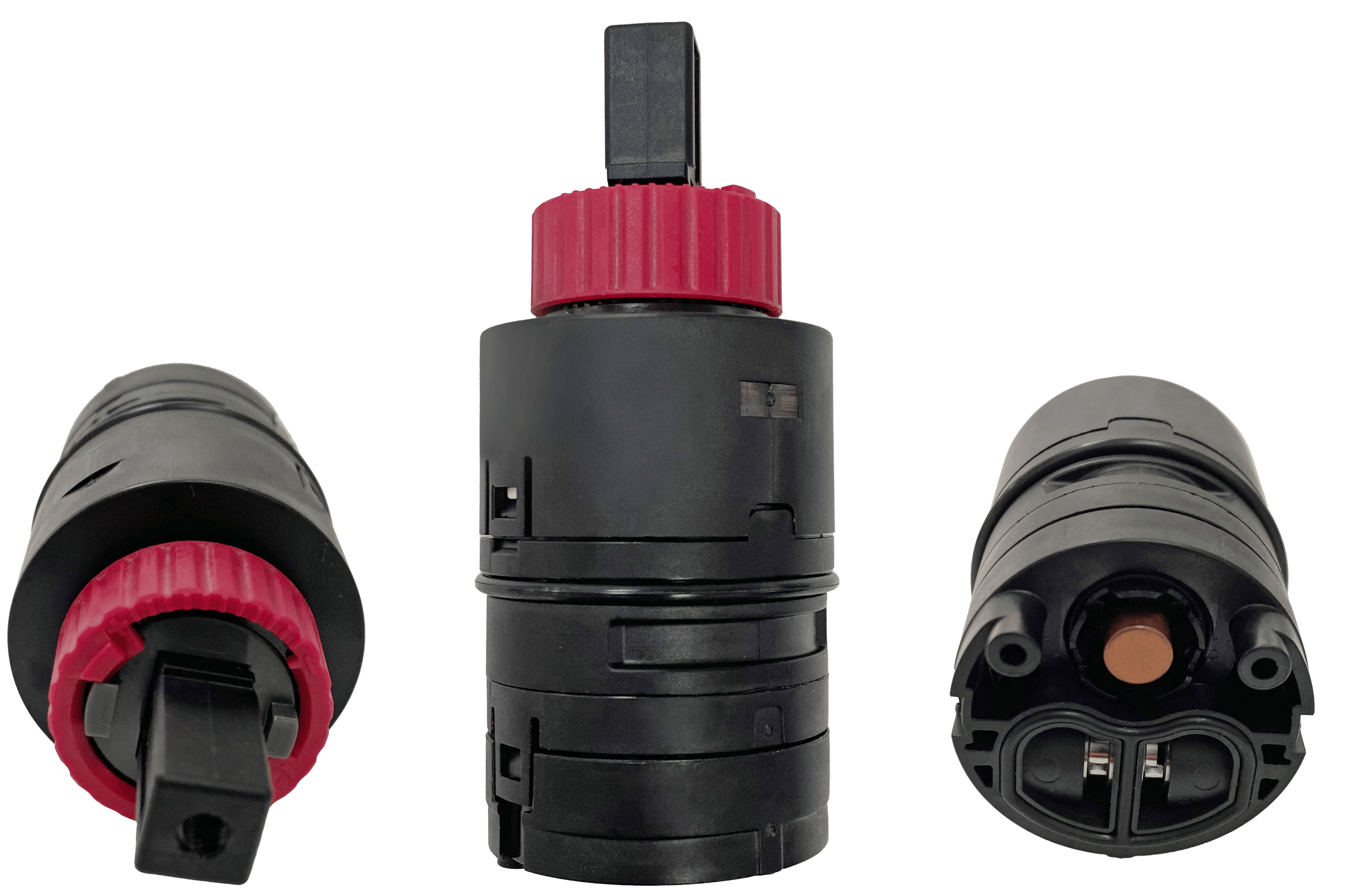
At Bélanger, we believe good engineering should make everyday life easier, even when the technology itself is hidden behind the wall.
That's why our universal shower valve systems include options for both pressure-balanced and combined thermostatic/pressure-balanced control.
Our 100VSR universal rough-in valve supports compatible P and T/P cartridges, offering flexibility for standard shower configurations.
For more elaborate shower systems, our 300VSR universal rough-in valve also supports P and T/P cartridges, with compatible two-way and three-way diverter configurations for multiple shower outlets.
Both systems allow installers to select the appropriate compatible cartridge and trim according to the shower design and desired functionality.
For a practical example, take a look at our Solara T/P shower kit.
The advantage of T/P technology is that you don't have to choose between direct pressure compensation and thermostatic temperature control. You get both in one system.
Pressure-balanced vs. thermostatic vs. T/P: Which is better?
So, which shower valve should you choose?
The answer depends on what matters most to you, your plumbing installation, and the shower experience you're looking for.
Our recommendations
Choose a pressure-balanced valve if you're looking for dependable everyday performance and protection from sudden pressure fluctuations. It's a practical choice for many residential showers.
Choose a thermostatic valve if maintaining a selected shower temperature is your main priority, especially when incoming water temperatures change throughout the year.
Choose a T/P valve if you want both thermostatic temperature regulation and direct pressure balancing in the same system.
Regardless of which you choose, all three automatic valve types offer advantages over traditional, uncompensated hot/cold mixing.
And that's good news for everyone in the household.
What else should you consider when choosing a shower valve?
The cartridge is an important part of the equation, but it's not the only consideration.
Before selecting your shower system, there are a few other details worth discussing with your plumber.
1. Make sure the valve and trim are compatible
The rough-in valve is installed behind the shower wall, while the trim includes the visible controls and finishing components.
Not every cartridge or trim will fit every rough-in valve.
For example, Bélanger's 100VSR and 300VSR universal systems support compatible pressure-balanced and T/P configurations, but the correct cartridge and trim must be selected for the intended installation.
Always verify compatibility before purchasing or changing components.
2. Think about how many shower outlets you want
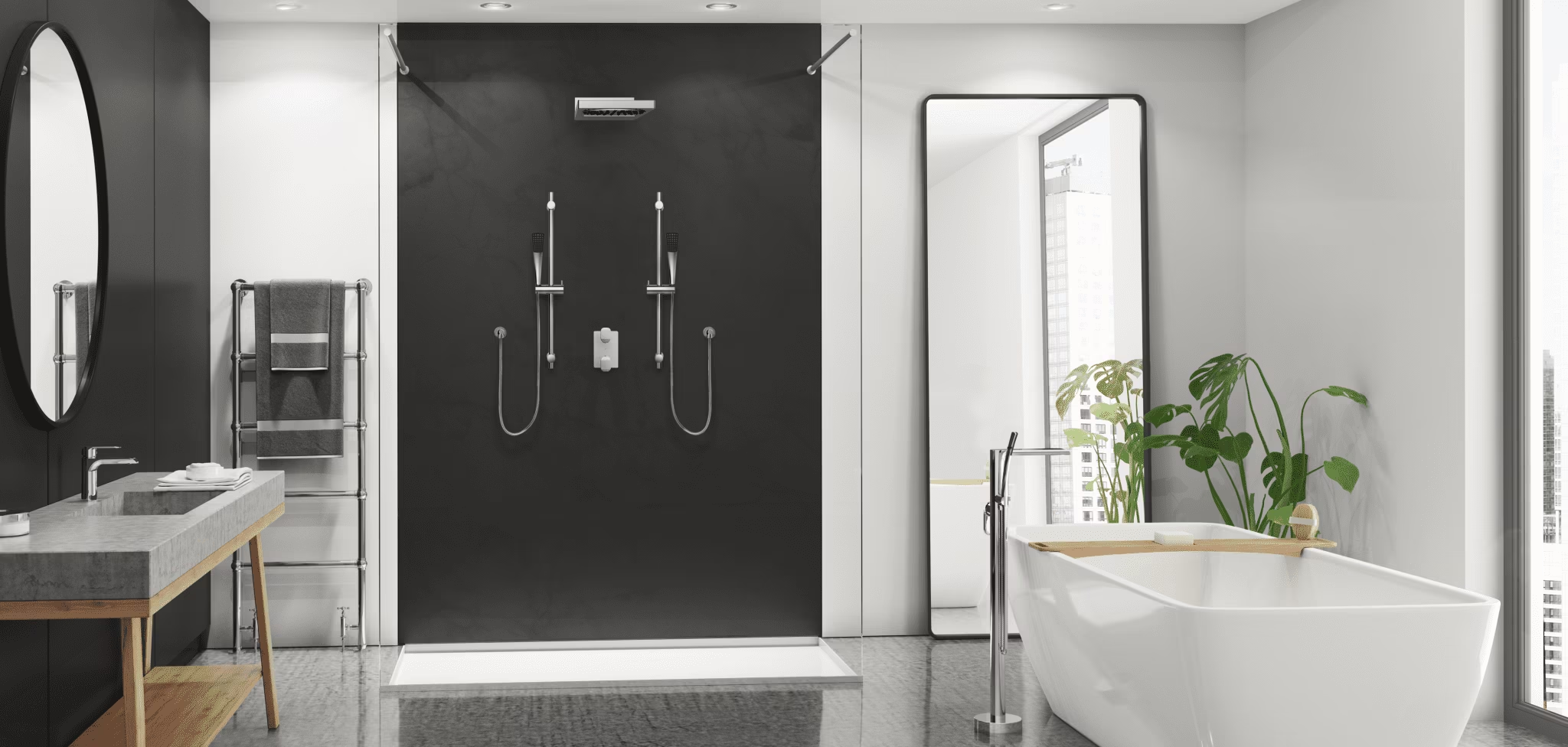
Planning for a rain shower, handheld shower, or body sprays?
Your system may require a diverter to direct water between the different outlets.
A diverter controls where the water goes, while the mixing cartridge controls how the hot and cold water are regulated.
They're two different jobs, even though both can be incorporated into the same shower system.
For inspiration, explore our guide to creating a spa experience at home.
3. Don't overlook temperature-limiting features
Modern shower systems may include adjustable temperature-limiting devices designed to help reduce the risk of excessively hot water.
These features must be properly adjusted during installation according to the manufacturer's instructions and applicable plumbing requirements.
Even an excellent mixing cartridge cannot compensate for every plumbing problem, such as insufficient hot water, extreme supply conditions, or incorrect installation.
4. Consider water efficiency, too
Temperature control is only one part of a comfortable shower.
The showerhead's flow rate also affects water consumption and the overall shower experience.
If you're looking to create a shower that's both comfortable and water-efficient, read our guide on how WaterSense showerheads work.
Frequently asked questions about shower mixing valves
Is a thermostatic shower valve better than a pressure-balanced valve?
Not necessarily. Both are designed to help stabilize shower temperature, but they use different technologies.
A pressure-balanced valve responds directly to pressure fluctuations, while a thermostatic valve senses and regulates mixed-water temperature. A combined T/P valve incorporates both mechanisms.
The best option depends on your preferences, plumbing conditions, and the level of control you're looking for.
Will a pressure-balanced valve stop my shower from getting hot when someone flushes the toilet?
A properly installed pressure-balanced valve is designed to compensate for changes in hot and cold water pressure, reducing the risk of sudden temperature fluctuations.
However, it cannot prevent the underlying drop in water pressure, so you may still notice a change in water flow.
Does a thermostatic shower valve maintain the same temperature year-round?
A thermostatic valve automatically adjusts the hot/cold mixture to help maintain your selected temperature as incoming water temperatures change.
However, its performance depends on the available water supplies, the valve's operating limits, and correct installation. Some adjustment or maintenance may still be necessary.
Is a thermostatic valve the same as a T/P valve?
No.
A thermostatic (T) valve senses and regulates mixed-water temperature. A combined thermostatic/pressure-balanced (T/P) valve also includes a mechanism that directly responds to hot and cold supply pressure differences.
Both can compensate for changing conditions, but their internal mechanisms are different.
Can I upgrade from a pressure-balanced cartridge to a T/P cartridge?
It depends on your existing shower valve.
Some universal rough-in systems, including Bélanger's 100VSR and 300VSR, are designed to support compatible P and T/P configurations.
However, that doesn't mean every existing pressure-balanced shower can be upgraded simply by replacing the cartridge. The rough-in, cartridge, and trim must all be compatible.
Always verify your installation before attempting an upgrade.
Do thermostatic or pressure-balanced valves increase shower water pressure?
No. Their primary purpose is to regulate water temperature, not increase the pressure available from your plumbing system.
If your shower has consistently low water pressure, the cause may be related to the supply, piping, showerhead, or another part of the installation.
A better shower starts behind the wall
A beautiful showerhead might be the first thing that catches your eye, but the experience is often determined by what's happening behind the wall.
Pressure-balanced valves offer reliable compensation for sudden pressure changes. Thermostatic valves focus on maintaining your selected water temperature. And combined T/P cartridges bring both approaches together.
At Bélanger, we're particularly proud of the engineering behind our T/P technology, because great design isn't just about what you can see. It's also about the comfort, reliability, and performance you experience every day.
So, whether you're planning a complete bathroom renovation or simply looking to improve your existing shower, take a moment to consider the valve behind the handle.
It might just be the most important part of your new shower.